

If you’ve been told in the past that your eye shape makes wearing contact lenses a challenge, it’s time to reconsider. A lot of people assume astigmatism puts contacts off the table entirely.
The good news is that astigmatism does not rule out contact lens wear, and there are several lens types designed specifically to help correct it. The right fit depends on your prescription, your lifestyle, and a proper eye exam with a qualified eye doctor. While astigmatism adds a layer of complexity to the fitting process, it certainly doesn’t take contact lenses off the table, so you can enjoy the freedom of contacts while maintaining the clarity you need.
What Astigmatism Actually Means for Your Vision
Astigmatism is a very common condition that happens when the cornea or lens has an irregular curve. Instead of being perfectly round like a basketball, the eye is shaped more like a football. That irregular shape causes light to focus unevenly, which can make things look blurry or slightly distorted at various distances.
You might notice it as difficulty reading road signs clearly at night or finding that text on a screen looks slightly off, even with your glasses on. Because this condition involves specific blur angles, your contact lenses need to stay in a fixed position to work correctly.
Types of Contact Lenses That Work for Astigmatism
There isn’t a one-size-fits-all approach to correcting astigmatism with contacts. Different eyes require different levels of stability and moisture.
Toric Lenses
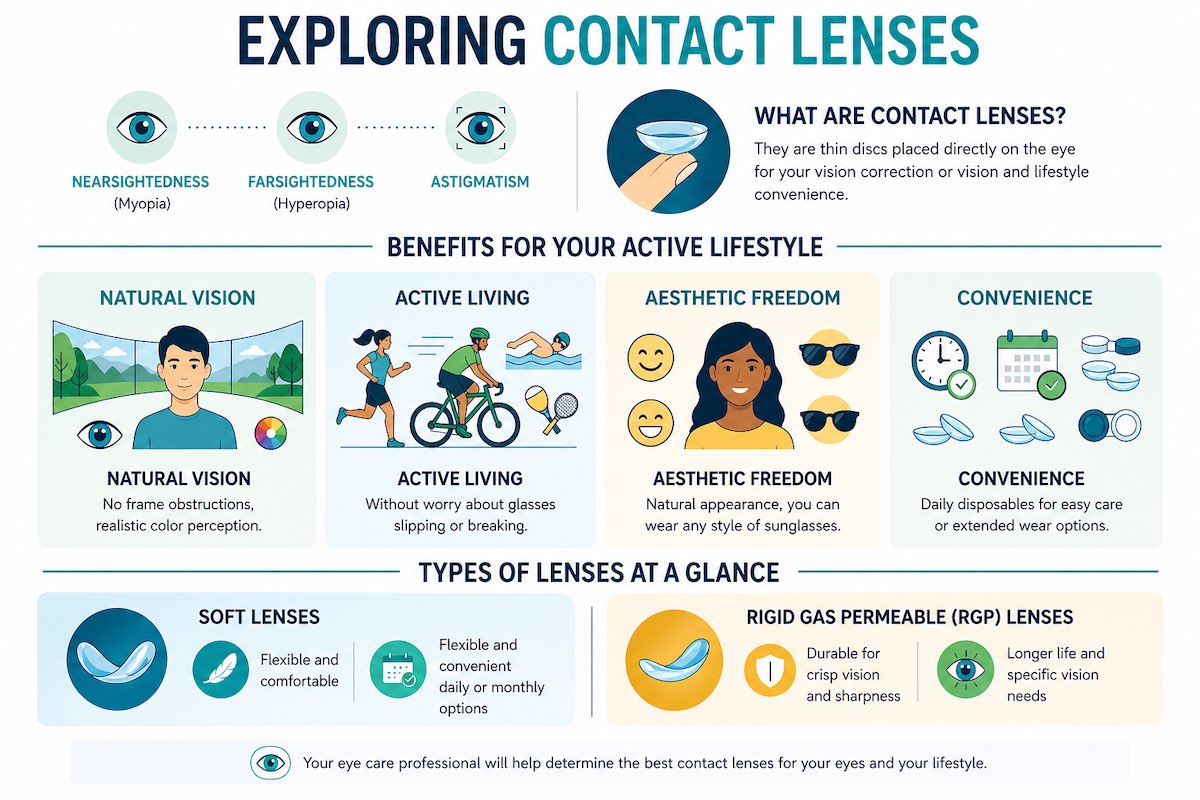
Toric lenses are the most common contact lens choice for people with astigmatism. Unlike regular contacts, they have different corrective powers in different zones of the lens to match the uneven curve of your cornea. They also feature weighted zones or thin-thick areas that help the lens stay oriented correctly every time you blink, so the correction stays where it needs to be.
You can find these in daily disposables, bi-weekly, or monthly formats, depending on your preference for convenience or value. Daily toric lenses, for example, mean no cleaning routine and a fresh lens every time you put them in.
Rigid Gas-Permeable (RGP) Lenses
For those with higher levels of astigmatism, rigid gas-permeable lenses may offer the clearest vision. These lenses are made of a firmer material that holds its shape on your eye, essentially creating a new round surface for light to enter.
While they can take a couple of weeks to get used to, the visual sharpness they provide is often worth the adjustment period.
Hybrid Lenses
If you want the clarity of a rigid lens but prefer the feel of a soft lens, hybrid designs might be the answer. These lenses feature a hard centre for crisp vision surrounded by a soft outer skirt for increased comfort. They can be an excellent middle ground for patients who struggle with the fit of traditional toric lenses.
How a Contact Lens Fitting Works
A fitting for astigmatism is more detailed than a standard eye exam. During this process, your contact lens fitter takes precise measurements of your cornea’s shape to help your lenses sit properly on your eyes.
The fitting process can include:
- Measuring the corneal curve: Specialized tools like corneal topography create a detailed map of your eye’s surface.
- Assessing lens orientation: We check how the lens moves when you blink so the corrective power stays aligned with your astigmatism.
- Testing trial lenses: Before ordering your final lenses, we’ll provide trial lenses for you to try in the clinic. This lets us assess comfort, stability, and clarity before you commit to a full supply.
Common Questions About Contacts and Astigmatism
Making the switch to contacts always brings up a few questions. We’re happy to answer any of yours, but here are a couple we often hear:
Are They Comfortable to Wear?
Most people find toric lenses feel similar to regular soft contacts. There may be a short adjustment period when you first start wearing them, especially if you’ve never worn contacts before.
If you feel any irritation, mention it to your optometrist, as a simple change in lens material or base curve can make a huge difference.
Can Children with Astigmatism Wear Contacts?
While age and maturity level both factor into whether contacts are a practical choice for your child, many young people have worn them with great success. Some children are ready by their early teens, while others benefit from waiting a bit longer. It’s often a great boost for their confidence and performance in sports.
For children with myopia and astigmatism, contact lenses can be part of a broader myopia management approach to help slow how quickly their prescription changes over time.
Start Your Journey to Clearer Vision
If you’ve been relying on glasses to correct your astigmatism and want to explore the flexibility of contact lenses, a comprehensive eye exam is the best place to start. The exam confirms your current prescription and gives us the information we need to talk through which lens options fit your lifestyle.
Schedule your contact lens fitting at Focal Point Comprehensive Vision Care in Morden or our Carman Vision Services location today. Our team is here to help you find the right fit so you can see your best with confidence.