
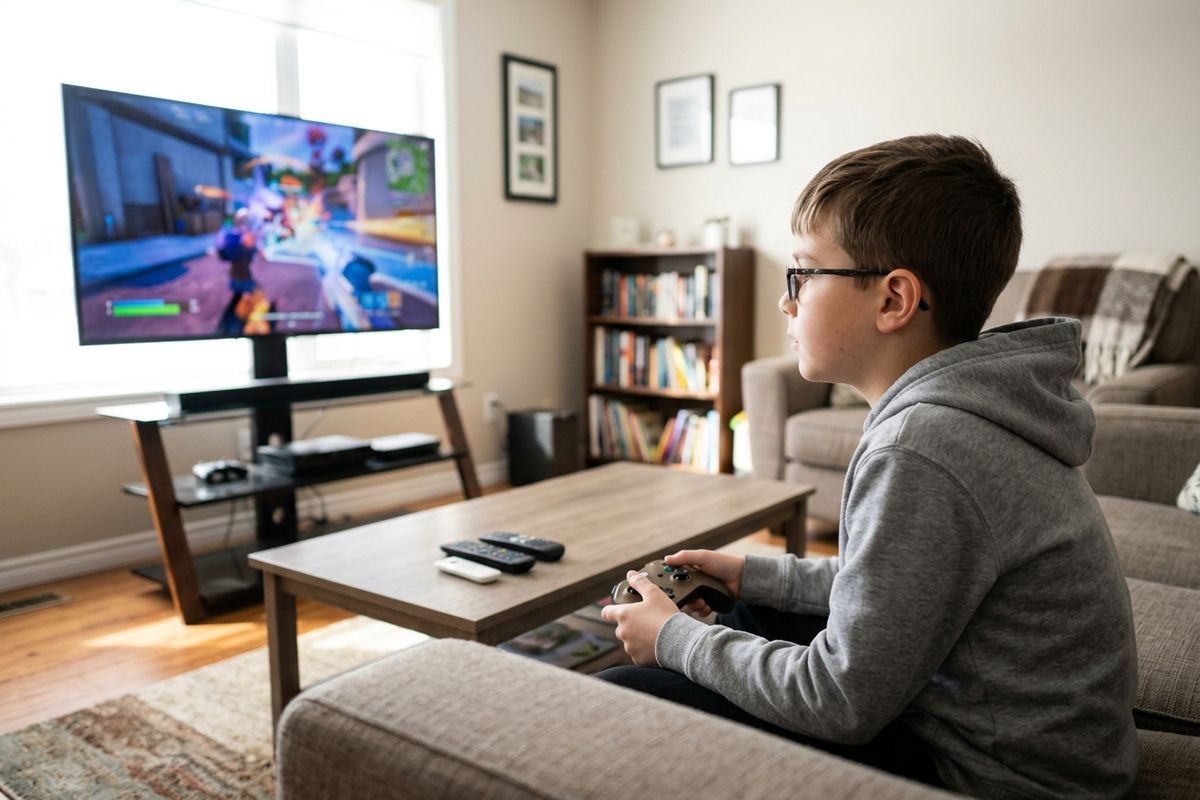
Screens are a huge part of modern childhood. Kids use tablets for schoolwork, play games on phones, and watch shows to unwind. It feels harmless, but parents are noticing the same thing: their kids are squinting more, sitting closer to the TV, and complaining about headaches. Naturally, parents wonder if all this digital exposure affects their kids’ eyes.
Screen time alone doesn’t cause myopia, but it can contribute to its development, especially when kids spend long stretches focusing up close. Keeping a close watch on their habits can help protect their long-term vision.
Diagnosing vision changes early gives kids the best chance at clear, comfortable sight.
What Myopia Does to Your Child’s Vision
Myopia happens when the eyeball grows slightly too long. Instead of landing on the retina, light focuses just in front of it. The result is that close objects look sharp, but anything in the distance looks blurry or hazy.
For kids, this often goes unnoticed at first. They can still see their tablet clearly, so nothing feels wrong. But the board at school or a friend across the playground starts becoming harder to make out. Myopia is one of the most common vision conditions in children, and its prevalence continues to grow.
Myopia tends to get worse through childhood and often into the early twenties, which is why early detection matters so much.
The Link Between Screen Time and Myopia
Children tend to hold phones and tablets much closer to their faces than they would hold a book. That shorter viewing distance increases near-focus demand. Over time, long stretches of close-up work, especially when paired with less outdoor time, may contribute to a higher risk of myopia.
Research has connected heavy screen use to a higher risk of myopia in children. It’s not just about screens specifically. It’s about how much time kids spend focused on things up close, and screens tend to dominate that near-vision time more than anything else in a child’s day.
Signs Your Child May Have a Vision Problem
Kids rarely say, “my vision is blurry.” Instead, you usually notice differences in how they behave. Watch for these common signs:
- Squinting when looking at distant objects or screens
- Moving closer to the TV or holding devices closer to their face
- Frequent headaches, especially after school or screen time
- Rubbing their eyes or blinking more than usual
- Tired eyes or complaints of eye strain by the end of the day
If any of these sound familiar, it’s a good idea to book an eye exam. Vision changes in kids can happen gradually, so regular checkups can uncover what everyday life might miss.
How Much Screen Time Is Too Much?
There’s no magic number that works for every child, but general guidelines give you a helpful starting point. For children under 2, screens are best avoided altogether, though video calls are a reasonable exception.
For children ages two to four, many guidelines recommend no more than one hour per day, and less is better. For children between 5 and 17, limiting leisure screen time to 2 hours a day helps protect developing eyes.
That doesn’t include school-related screen use, which is harder to control. However, keeping non-school screen time in check goes a long way toward reducing overall near-vision demand on growing eyes.

3 Simple Rules to Protect Your Child’s Eyes
Building healthy habits around device usage makes a big difference. Try introducing these simple guidelines into your family’s daily routine.
The Elbow Rule
Ask your child to hold their arm out and bend it at the elbow. The distance from their elbow to their wrist is how far any screen should be from their face. It gives kids an easy way to self-check without needing a ruler.
The 20-20-20 Rule
Every 20 minutes of screen time, your child should look at something at least 20 feet away for about 20 seconds. This gives their eyes a short break from close-up focus and can help reduce digital eye strain. Some newer guidance suggests stretching that break out to a minute or two, since 20 seconds is on the shorter end of what’s actually useful.
When your child stares at a screen, the muscles inside their eyes that control near focus stay contracted the entire time. Looking off into the distance lets those muscles relax, which helps reduce fatigue from a long stretch of screen use.
It’s not a fix for myopia on its own, and the specific numbers are more of a memorable rule of thumb than a precise prescription, but building regular breaks into your child’s screen routine is a low-effort habit that genuinely helps with daily comfort.
The 2-Hour Rule
Cap recreational screen time at two hours per day. That includes phones, tablets, gaming consoles, and TV outside of schoolwork. When kids fill extra time with outdoor play, reading, or hands-on activities, they naturally move away from the near-vision demand that puts pressure on developing eyes.
What Helps Slow Myopia Progression in Kids
Time spent outside gives kids something screens can’t: distance. When your child looks across a field or up at the sky, their eyes get a break from near-focus work.
Natural light also plays a role in healthy eye development, which is why kids who spend more time outdoors tend to have lower rates of myopia progression. Bright light exposure can be a strong protective factor against myopia development. Even an extra hour outside each day can help, and many myopia education resources encourage aiming for around two hours of outdoor time when possible. A walk, backyard play, or time at the park all count toward protecting your child’s long-term vision health.
Exploring Your Child’s Vision Options
If your child has already been diagnosed with myopia, there are several options available. Glasses remain a common and effective first choice for correcting blurry distance vision.
MiYOSMART spectacle lenses are a child-friendly option that use D.I.M.S. technology to correct vision while helping slow myopia progression. MiSight contact lenses are another option for kids ready to try contacts. They’re daily disposable lenses designed specifically to slow myopia progression while correcting blurry distance vision.
The most important step is scheduling regular eye exams. A child’s prescription can change quickly, and routine visits allow your optometrist to track those changes and adjust the approach as needed.
Help Protect Your Child’s Vision
Healthy screen habits can make a real difference, but regular eye exams are still one of the best ways to monitor how your child’s vision is developing. Contact us to schedule your child’s eye exam today. We can help you understand how their vision is changing and whether myopia management may be right for them.